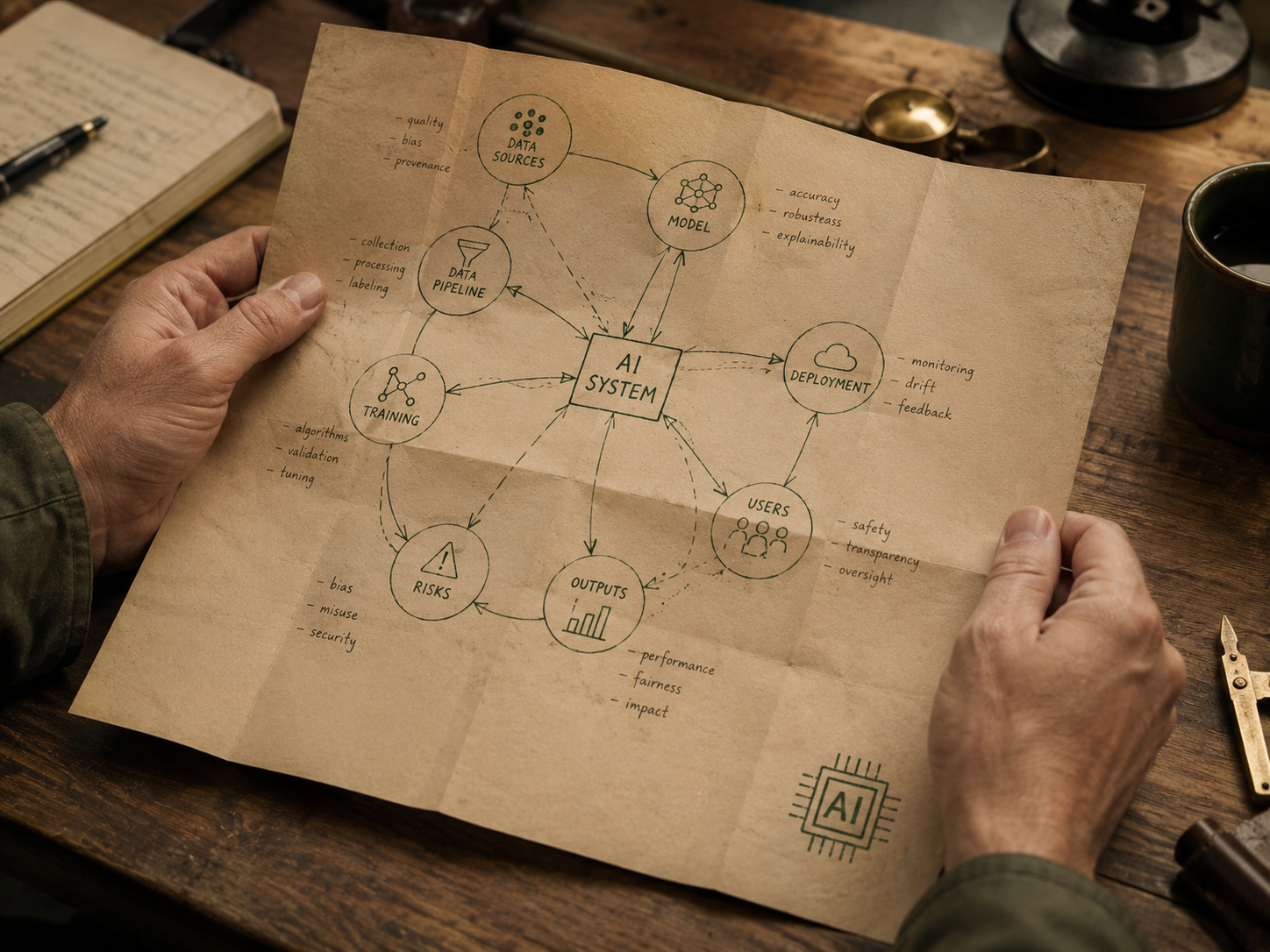
AI data exposure rarely needs to look cinematic. It can look like a prototype workspace that became production, a shared project with inherited access, a bucket full of evaluation data, a debug export nobody deleted, or prompt logs visible to people who do not need them.
That is why "we are not training on customer data" is not a complete answer. Training use is one question. Storage, retrieval, logging, sharing, export, and access are separate questions.
The prototype path becomes the production path
Teams move fast during AI experimentation. They connect a data source, upload examples, capture prompts, dump test output, and share a workspace so the project can keep momentum. That is normal. The risk appears when nobody re-reviews the path before the workflow becomes durable.
Prototype defaults are usually generous. Production defaults should not be.
The review surface
A practical AI data review should cover input data, retrieved context, embeddings or indexes, fine-tuning sets, prompt logs, tool responses, output storage, exports, workspace sharing, service identities, and retention. That sounds like a lot because the data path is a lot.
The goal is not to slow every experiment to a crawl. The goal is to know when an experiment crosses into production-like handling of sensitive data and needs production-like controls.
The boring fix list
Scope workspaces. Separate dev from production. Tag sensitive datasets. Review inherited access. Limit log retention. Sanitize debug exports. Make ownership visible. Put AI data paths into the same posture conversations as cloud storage, SaaS shares, databases, and source repositories.
AI did not invent messy data handling. It made messy data handling easier to query.